

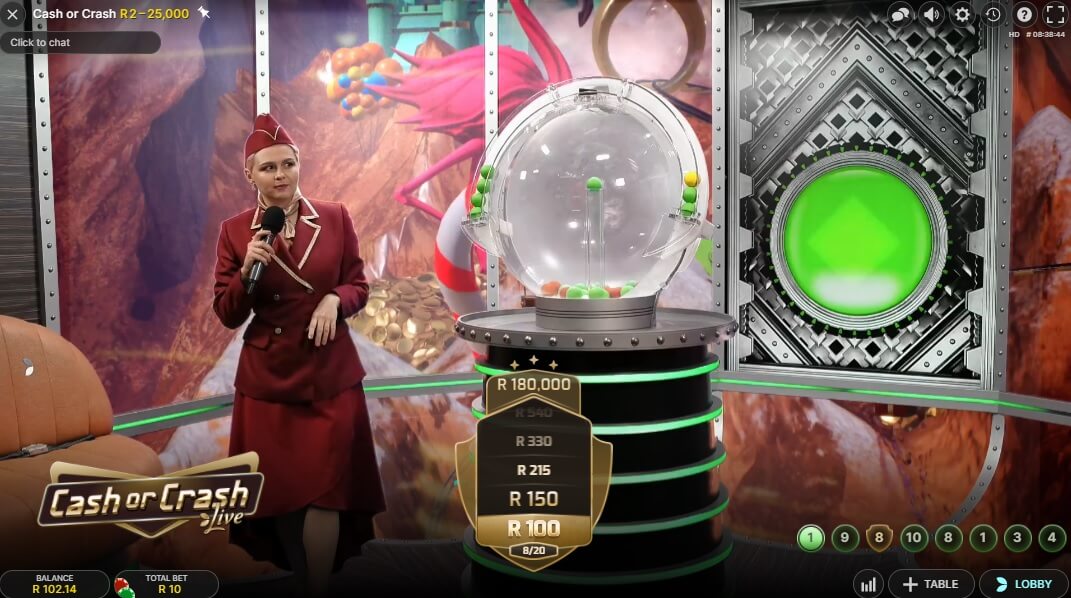
When you play live game shows, you realize that loss limits are a major factor for maintaining the excitement and your budget under control. cash or crash live deposit bonus is a great example. A round can boom or bust in seconds, and those multipliers rise in a way that gets your heart pumping. Having a solid strategy for your losses isn’t just smart; it’s vital. For Canadian players, mastering these tools and the thinking behind them transforms the experience. It stops being a simple bet and starts feeling like a night out where you’re in control. Let’s go through what loss limits are, where you can find them, and how to use them for this specific dealer-hosted game. You’ll come away ready to play with more assurance and a lot more control.
FAQ
What precisely is a loss limit in online gaming?
A loss limit is the maximum amount you choose you can afford to lose. You establish it for a session, a day, or a month before commencing playing. It’s a monetary limit that helps you keep your cool and escape the trap of chasing losses. The goal is to view gaming as entertainment, not a economic hazard.
Am I able to set a loss limit directly inside the Cash or Crash Live game?
No. The Cash or Crash Live game window, where you watch the live host and make your wagers, doesn’t have this feature. You need to use the responsible gaming tools offered by the online casino website that holds your account. There is where you can set limits that the casino’s platform will https://en.wikipedia.org/wiki/Category:Online_gambling apply.
How do I locate the loss limit tools at an online casino?
Go to your account dashboard. There’s typically a section labelled “Responsible Gaming,” “Play Management,” or “Account Limits.” These pages are separate from the games. They allow you to set limits for your deposit capacity, lose, or wager over specific timeframes, and the casino software will then automatically enforce them.
What’s the best way to calculate a sensible loss limit for myself?
Begin with your extra funds, the money left after bills and savings. Choose a small part of that for entertainment, including gaming. That’s your total limit. After that, allocate smaller sums for each gaming session. A good rule is to never risk money whose loss would bother you or change your day-to-day life.
What is the result if I meet the loss limit set by the casino?
The casino’s system takes over. Once you’ve lost up to your set limit, you’ll usually be blocked from placing any more real-money bets for the rest of that time period. With a daily cap, your play stops until the next day. This enforced stop helps you adhere to your budget.
Is a loss limit equivalent to a deposit limit?
They are related but different. A deposit limit caps how much money you can transfer into your casino account. A loss limit sets a ceiling on how much of your balance you can lose during play. Combining both is an effective strategy. One regulates the inflow, the other manages the outflow.
Can I adjust or delete my loss limit after it has been established?
It depends on the casino, but reputable ones have safeguards. If you want to raise or remove a limit, there’s almost always a waiting period, like 24 hours or a week. This stops you from making a rash decision in the middle of a frustrating session. Reducing your limit is typically immediate. This mechanism encourages careful thought, safeguarding you from impulsive actions.
Grasping the Concept of a Loss Limit
A loss limit is just a fancy term for a basic concept: it’s the amount of money you choose you can manage to forfeit before you even start playing. Think of it as a personal checkpoint. When you reach that amount, your session is over. In a game like Cash or Crash Live, where the balloon can explode at any time, this cap is your best friend. It prevents you from seeking to regain what you’ve forfeited in a fit of anger. I don’t see it as a rule that kills the fun. On the contrary, it’s the tactic that lets you have fun without concern. Define this threshold before the round begins, and you can enjoy without limits. You’ve already made the prudent option, so you can concentrate on the core experience.
Gambling Control Features at the Casino Tier
Your player profile is where you take actual control. Internet casinos licensed for Canadian users must include safe gambling tools. You’ll discover these in your profile settings, usually under a tab called “Responsible Gaming,” “Gaming Limits,” or something similar. This is the control panel. Here you can set caps for your deposits, your losses, your bets, and even your play duration. A loss limit here is serious business. You can set it for a single day, a weekly period, or a month. Once you lose that amount, the gaming platform’s system will block you from further real-money play for the remainder of that time. My advice? Access your account and find this page as soon as you open an account. Getting these settings in place is the primary action toward a gambling routine that lasts and continues to be entertaining.
Ways to Manually Set Your Personal Spending Cap
Prior to you access the casino’s tools, personal discipline is essential. I like a simple three-step method. Firstly, review your budget for the month. Determine what’s left over for fun once you have covered essential expenses like rent, groceries, and savings. Do not use money meant for essentials. Second, set aside a small portion of that fun money and call it your game bankroll for the month. This is your total loss limit. Third, split that monthly number into even smaller chunks for each time you play. Say your monthly limit is $100. You may choose that any single session of Cash or Crash Live gets a $20 cap. Jot down that $20 on a sticky note. Attach it to your display. Treat it like a real promise to yourself. Practicing this develops a sense of self-awareness that digital tools can’t replace.

Why Loss Limits Play a Key Role in a High-Risk Game
Cash or Crash Live represents volatility in a nutshell. The payout multiplier ticks up, fostering hope with every second, but the collapse is a random event that doesn’t care about your luck. This is what makes the game so captivating, and also how it can wipe out a bankroll in minutes if you aren’t cautious. Without a loss limit, the temptation is brutal. After a few quick crashes, the impulse to bet bigger to win it all back becomes a strong, dangerous urge. A pre-set limit stops that emotional wiring. It’s an objective signal that the session ends, full stop. It shields you from the clouded judgement that causes their biggest losses. In this specific game, a loss limit is far from a casual tip. It is a core part of playing wisely.
Are Built-In Loss Limits Offered by the Game?
Let’s be straightforward. The Cash or Crash Live title, the live version you watch from the studio, doesn’t have a loss limit button. Evolution designed the game as a captivating live show, with emphasis on the betting area and the increasing multiplier. The game’s system won’t stop you if you’re having a bad run. That responsibility is yours. This is typical of live casino games; they’re about entertainment, not financial management. But the website where you play, the casino site, is a different story. That’s where the actual tools reside. The tools that let you set a strict loss cap are located in your account settings at the casino, not within the game’s display. We’ll cover those shortly.
The Essential Role of Session Budgeting
Session budgeting is the point where your loss limit reaches the felt. For Cash or Crash Live, I prefer the “unit” system. Take your session loss limit and split it into at least twenty miniature, equal pieces. If your session limit is $20, then one unit is $1. This approach achieves something crucial. It lets you endure the game’s natural ups and downs without wasting your entire stack on three unlucky rounds in a row. You begin to view each bet as one piece of a larger plan, not a frantic hope to get back to even. Sticking to your unit size maintains you at the table longer. You gain more time to enjoy the host’s banter and the tension of the rising multiplier. More rounds mean more chances, statistically, to catch a good ride before the inevitable crash.